
Cat–Cow Pose: A Simple Movement That Still Matters
Some movements remain in yoga practice for a reason.
Cat–Cow is one of them.
Often introduced in early classes, the movement can appear almost too simple to matter. Yet the quiet value of Cat–Cow lies precisely in that simplicity. It restores something many modern bodies lose: gentle, coordinated movement through the spine.
For many adults working long hours at a desk, that alone is significant.
The Modern Spine
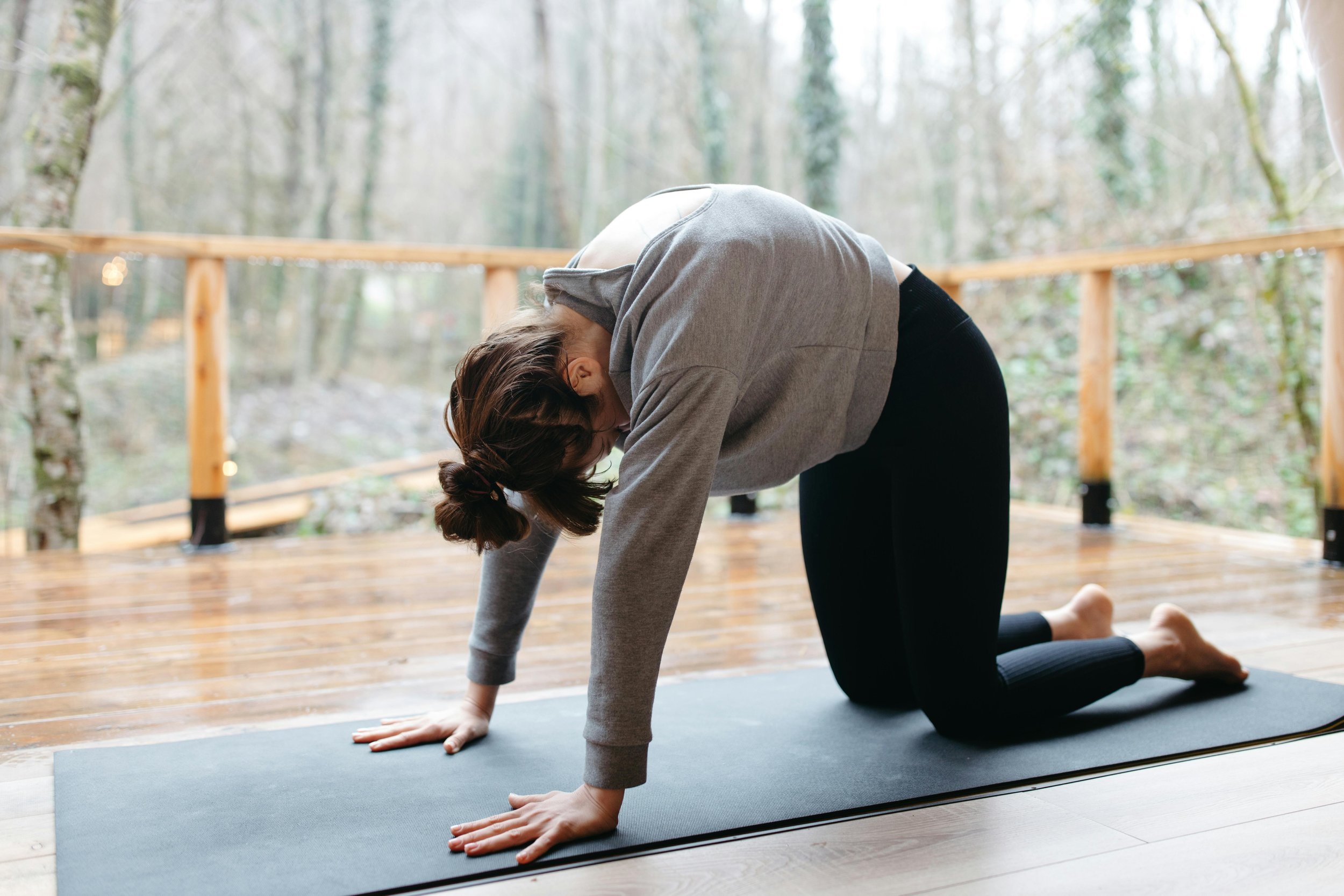
Much of daily life places the body in one position for long periods. Sitting, typing, driving, and looking at screens all reduce the variety of movement the spine experiences.
Health guidance from Harvard Medical School frequently emphasises the importance of maintaining spinal mobility as we age. When the spine moves regularly through its natural ranges — flexion, extension, and rotation — surrounding tissues remain more responsive and adaptable.
Cat–Cow introduces that movement in a controlled and accessible way.
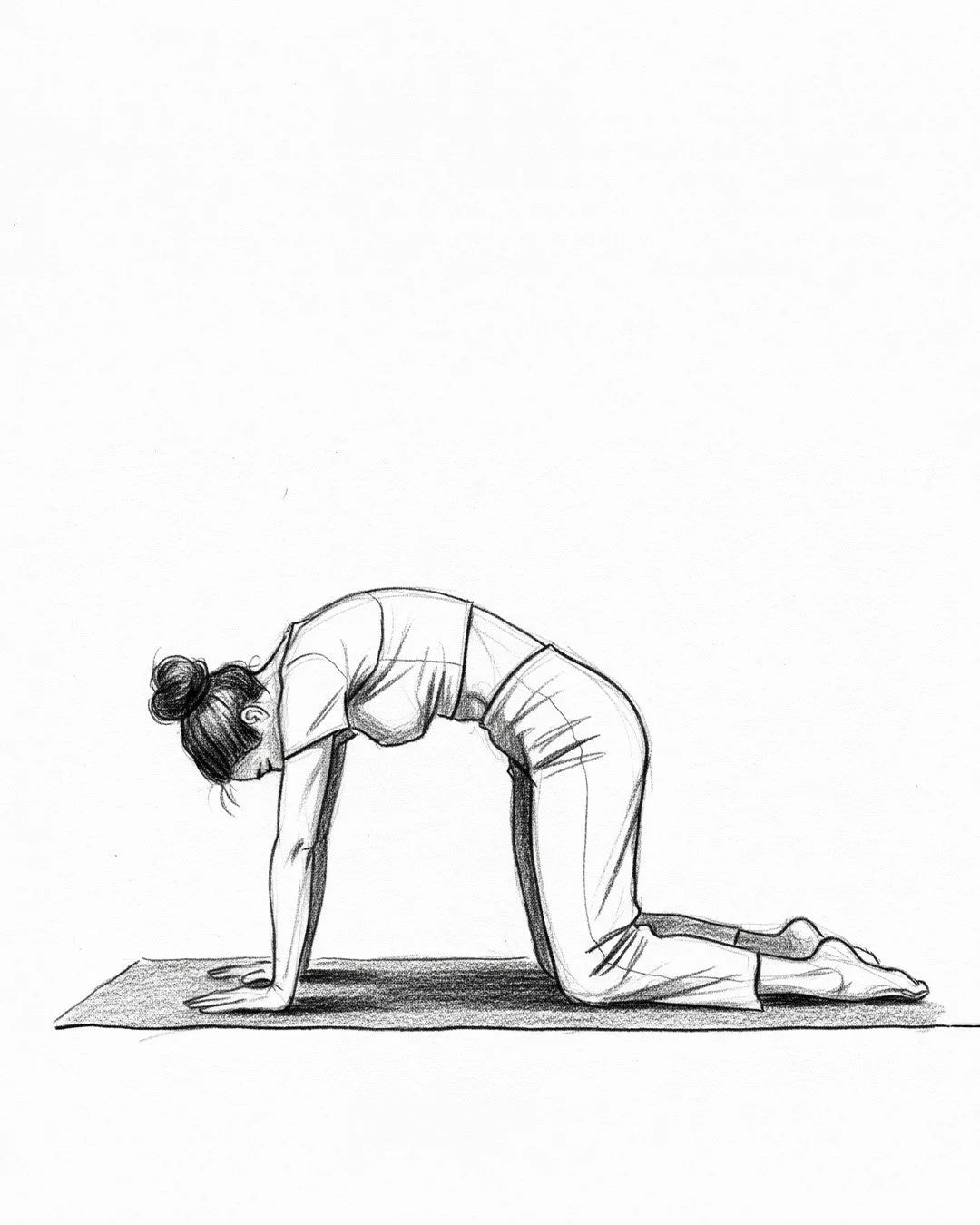
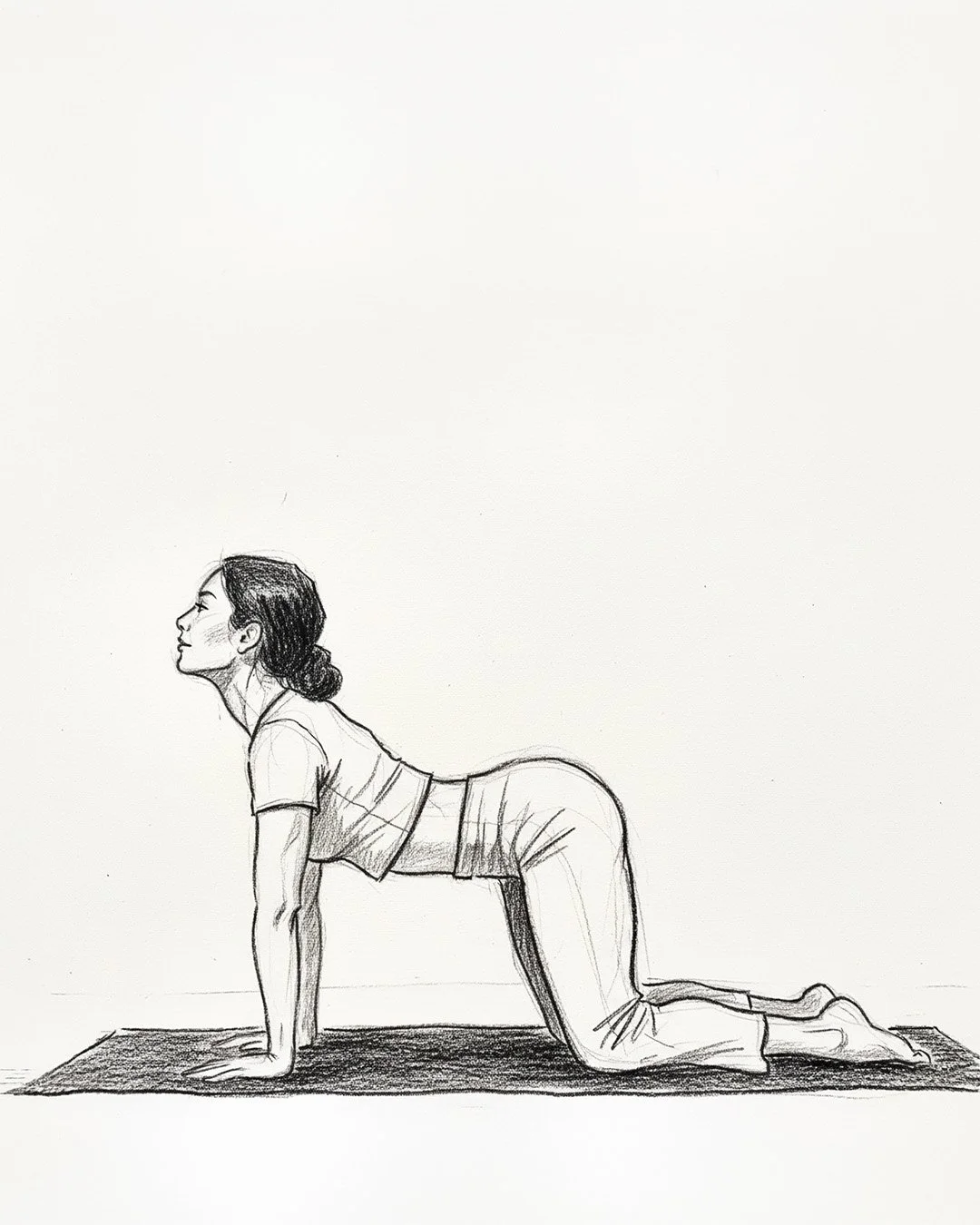
The spine alternates between rounding and arching, encouraging gentle articulation between vertebrae. It isn’t a stretch in the dramatic sense. It’s more like reintroducing motion to joints that have been relatively still.
For many people, that alone can bring a noticeable sense of relief.
Movement as Maintenance
In discussions around longevity and musculoskeletal health, physicians such as Dr. Peter Attia often emphasise a simple principle: the body benefits from regular, moderate movement far more than occasional extreme effort.
Mobility, strength, and coordination all respond best to repetition.
Cat–Cow reflects this principle well. The movement is rhythmic, low load, and repeatable. Practised slowly, it allows the body to experience movement without pressure to perform.
Over time, these small repetitions support coordination and awareness of how the spine moves.
Breath and Rhythm
Another reason Cat–Cow remains important is the relationship between movement and breath.
In many classes, the arch of the spine accompanies an inhale, while the rounding accompanies an exhale. This simple pairing introduces rhythm.
Neuroscientist Dr. Andrew Huberman has spoken extensively about how controlled breathing patterns influence the nervous system, helping shift the body toward a more regulated state. When movement follows breath, the effect becomes even more noticeable.
The sequence becomes less about stretching and more about pacing the body.
Breath leads. Movement follows.

A Classical Perspective
In traditional yoga texts such as the Hatha Yoga Pradipika, physical practice is described as preparation — a way to make the body steady, comfortable, and capable of deeper practices.
Foundational movements are therefore not secondary. They are essential.
Cat–Cow fits naturally within that philosophy. It prepares the spine, invites awareness, and establishes rhythm before more complex sequences begin.
It is a movement that reminds us practice does not need to be complicated to be effective.
Practising Cat–Cow Well
To practise with clarity:
Begin with hands under shoulders and knees under hips
Move slowly, allowing the pelvis to initiate the motion
Let the spine follow in a gradual wave
Avoid pushing into extreme range
Allow the breath to guide the timing
Rather than forcing shape, focus on continuity of movement.
The quality of attention matters more than the size of the motion.
Why It Still Matters
In a culture that often rewards intensity, it is easy to overlook the value of foundational practices.
Yet movements like Cat–Cow continue to serve a vital role.
They restore mobility after hours of sitting.
They connect movement with breath.
They prepare the body for more complex sequences.
And perhaps most importantly, they remind us that progress often comes from repetition rather than spectacle.
The most useful movements are often the ones we can return to again and again.
Last thoughts
Simple does not mean insignificant.
Cat–Cow remains relevant because the modern body still needs rhythm, mobility, and breath.
Weekly live online classes include structured, breath-led sequences that build carefully from these foundations.
You can view upcoming sessions here.
Further Reading
For readers interested in exploring the ideas referenced in this article:
Harvard Health Publishing on spinal mobility and posture
Dr. Peter Attia on musculoskeletal longevity and movement
Dr. Andrew Huberman on breath and nervous system regulation
Hatha Yoga Pradipika on the role of physical practice in yoga